
Embracing Transformation: The Art of Cocooning for Women in Transition

The Sacred Space of Becoming There’s profound wisdom in embracing transformation, just as a butterfly must retreat into its cocoon before emerging anew. This sacred process of becoming is essential for women navigating life’s transitions. So it is with us. 🦋 In a world that constantly demands our presence, our productivity, our performance, there comes a time when the wisest choice we can make is to withdraw. To cocoon. To create a sacred space where we can dissolve and reform into something new, something that more authentically reflects who we’re becoming. This blog is for every woman navigating a significant life transition. Whether you’re healing from loss, shifting careers, ending or beginning relationships, rediscovering yourself after motherhood, or simply feeling the pull toward a new version of yourself—know that your cocoon is not just valid, it’s vital. The Pressure to Skip the Process Society rarely honors the messy middle of transformation. We celebrate the “before” and applaud the “after,” but we grow uncomfortable with the nebulous in-between where true change occurs. How often have you heard these well-meaning but misguided messages? “Don’t isolate yourself—you need people right now.” “You should be over this by now.” “But what about your responsibilities to others?” “Are you sure you’re not just avoiding life?” These voices—whether from others or our own internal critic—fail to understand a fundamental truth: embracing transformation cannot be rushed. Just as the caterpillar within its chrysalis must completely liquefy before rebuilding itself cell by cell, our own metamorphosis requires time, privacy, and the courage to temporarily surrender our familiar form. The Wisdom of Withdrawal Cocooning isn’t avoidance—it’s a form of deep engagement with yourself. It’s not about hiding; it’s about holding space for the profound work happening beneath the surface. During my own period of cocooning after a devastating loss and career transition, I discovered that what looked like withdrawal to others was actually an intense period of: Processing emotions too complex to navigate in the presence of others Questioning beliefs I had inherited rather than chosen Reconnecting with parts of myself I had abandoned to please others Discerning which relationships nourished me and which depleted me Reimagining a future that honored my authentic desires rather than external expectations This withdrawal wasn’t weakness. It was wisdom. It wasn’t selfishness. It was self-preservation. Your Right to Choose What—and Who—Comes Forward Perhaps the most powerful aspect of this cocooning phase is the opportunity to intentionally curate your life moving forward. Like the butterfly that emerges with everything it needs and nothing it doesn’t, you get to decide what elements of your previous life deserve a place in your new chapter. This includes relationships. Not every person who was part of your past needs to be carried into your future. This truth can feel harsh, but it’s actually compassionate—both to yourself and to others. Some connections were meant for a season, offering exactly what you needed in a particular phase of growth. Honoring their purpose doesn’t mean you must maintain them indefinitely. As you contemplate embracing transformation, consider these questions: Which relationships consistently leave you feeling seen, supported, and strengthened? Which interactions trigger patterns of self-doubt, people-pleasing, or diminishment? Who celebrates your growth, even when it changes the dynamics between you? Who seems invested in keeping you small or maintaining the status quo? Which connections feel like an obligation rather than a choice? Remember: You are not obligated to take everyone with you. The butterfly doesn’t drag the caterpillar’s old skin into the sky. The Journey of Embracing Transformation Effective cocooning isn’t about completely disappearing (though there may be periods where that feels necessary). Rather, it’s about creating intentional boundaries that protect your transformation. Here are some practical approaches: 1. Create a physical sanctuaryDesignate a space—even if it’s just a corner of a room—that feels completely yours. Fill it with objects that soothe and inspire: books, plants, photos, natural elements, art supplies, comfortable textures. This physical representation of your cocoon becomes a tangible reminder of your commitment to your transformation. 2. Practice communication that honors both yourself and othersWhen declining invitations or reducing commitments, you might say: “I’m going through a period of deep personal work right now and need to focus my energy inward. I appreciate your understanding, and I’ll reach out when I feel ready to reconnect.” 3. Explore without expectationDuring this time, expose yourself to new ideas, practices, and perspectives without the pressure to commit to any of them. Read widely, try new creative outlets, explore spiritual practices, move your body in different ways. Notice what resonates and what doesn’t. 4. Develop rituals of release and renewalCreate simple ceremonies to mark the letting go of what no longer serves you and the welcoming of new possibilities. This might involve writing and burning letters, creating art that represents your journey, or developing daily practices that affirm your right to transform. 5. Find selective supportWhile general withdrawal may be necessary, consider finding one or two trusted allies who understand the importance of your cocooning. These individuals should be capable of witnessing your process without trying to fix, direct, or accelerate it. The Timeline of Transformation One of the most frequent questions I receive is: “How long should cocooning last?” The honest answer: As long as it needs to. For some, this might be weeks. For others, months or even years. The caterpillar doesn’t emerge on a schedule—it emerges when its transformation is complete. That said, healthy cocooning does evolve over time. What begins as a total withdrawal might gradually shift to selective engagement. What starts as complete uncertainty about your future identity may slowly clarify into glimpses of your emerging self. Trust your own rhythm. Your body, mind, and spirit know the pace of embracing transformation that will be sustainable for you. For Those Who Love Someone Who’s Cocooning If you’re reading this to better understand someone in your life who seems to be withdrawing, thank you for your compassion. Your willingness to learn rather than judge makes you exactly
Empty Nest Self-Discovery: A Mother’s Midlife Journey
Back to Herself
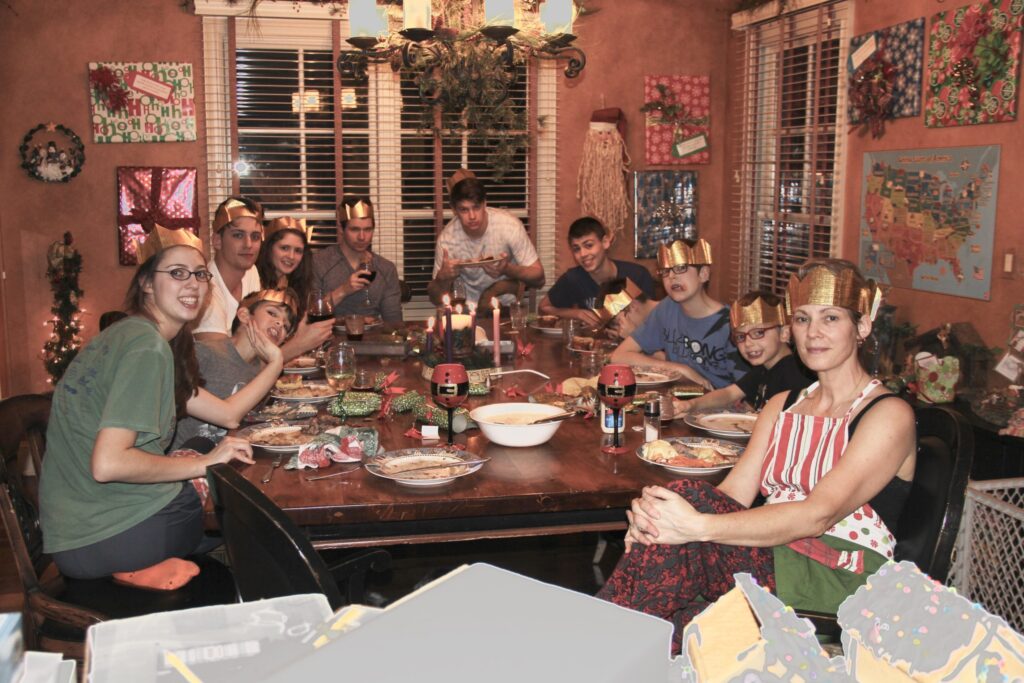
Empty nest self-discovery begins when the last child leaves home, transforming a mother’s identity and purpose. After dedicating decades to raising nine children, my journey back to myself started with silence – a deafening reminder that my primary role had fundamentally changed. This is my story of rediscovery. The Heart of Our Home I remember the day we bought that table. It was massive—oak and solid, with enough space for our growing family. My husband at the time had laughed, saying it dominated the dining room, but I knew we would need every inch of its surface. Nine children required space. Space for cereal bowls and homework assignments. Space for art projects and science experiments. Space for birthday cakes with too many candles to count. That table wasn’t just furniture; it was the command center of our lives. It was where teeth were lost in mouthfuls of corn on the cob. Where spilled milk became a regular occurrence, not something to cry over. Where arguments about whose turn it was to do dishes were mediated. Where Christmas cookies were decorated with more sprinkles than any baked good should reasonably hold. Most importantly, it was where we gathered—all eleven of us—squeezing in shoulder to shoulder, passing dishes, sharing stories about playground triumphs and classroom challenges. The noise level alone could overwhelm visitors, but to me, it was the symphony of family life. Now, I sit at that same table, running my fingers over the scratches and stains that map our history together. The chair where my oldest always sat still has that small burn mark from a science project gone wrong. The spot where my youngest insisted on sitting in a booster seat long after he needed one still shows more wear than the rest. Each mark tells a story, but no voices fill the room to bring those stories to life anymore. The silence is deafening. One by One: The Gradual Emptying of a Full Home The strange thing about raising nine children is that you experience the beginning of the empty nest while still very much in the throes of active parenting. My oldest was heading to college when my youngest was still learning to tie his shoes. Each departure created its own ripple effect through our family system, shifting dynamics and rearranging relationships. I remember driving home from dropping my firstborn at university, tears streaming down my face while three car seats still occupied the back of our family bus. It felt like a piece of my heart had detached and stayed in that dormitory room. Yet I still had eight more at home who needed dinner and baths and bedtime stories. With each child who left, I experienced that same heart-ripping sensation, but each time it was different. My daughter’s departure (second born) felt like losing my right hand—she had been my helper, my confidante. When my third left, it was the household joker gone, and laughter seemed scarcer. By the time my middle son departed, I had begun to understand that this pain was the inevitable shadow side of successful parenting. But understanding doesn’t ease the ache. People often say you’re supposed to prepare for this—for the arrows to leave the quiver. Psalms 127:4-5 tells us, “Like arrows in the hand of a warrior are the children of one’s youth. Blessed is the man who fills his quiver with them!” But no spiritual text fully prepares you for how it feels when your quiver is finally, completely empty. When your purpose for so many years suddenly shifts, you’re left staring at the empty spaces, trying to figure out who you are now. The Double Transition: Empty Nest and Divorce For me, the already challenging transition into the empty nest came with extra layers. My marriage ended while four of our nine children were still at home—our youngest boys. What followed was a disorienting season of back-and-forth travel and learning how to navigate life as an empty nester half the time. The rhythm of my days changed in an instant. One week, I was making meals for a bustling house of boys; the next, I was alone in the same space, the quiet almost echoing off the walls. The marriage that had endured the chaos of raising a big family couldn’t withstand the shift. The distractions of busy schedules and constant needs had kept deeper cracks hidden—until the stillness made them impossible to ignore. The house that once vibrated with energy now sat still, and I was left face-to-face with a version of myself I barely knew. Who was I without the daily pulse of motherhood? What was my role when the conversations, the noise, the needs… were gone? It’s been a tender and ongoing journey—learning to rediscover the parts of me that had been buried beneath years of caregiving. The passions I paused. The dreams I shelved. The me that existed before “Mum” became the center of everything. The Hardest Chair to Fill Sitting down at that table often felt like the hardest part of my day. Those empty chairs were vivid reminders of the years that had passed, the moments I couldn’t go back to, and the memories that no longer filled the air. I found myself setting out too many plates, cooking for an army out of habit, calling up the stairs to children who were no longer there. Each empty chair held memories—my artistic child who always sketched on napkins during dinner, my son who couldn’t sit still and bounced in his seat, my youngest two who would swap food when they thought I wasn’t looking. The family jokes, the grace we said together, the “high-low” game we played to share our days. Part of my empty nest self-discovery was recognizing those empty chairs were also proof of something beautiful—proof of the love I gave, the life we created, and the pride I carry for each of my children. They are empty because I did my job. I raised them to be
Finding Your Tribe in a New Chapter of Life

Life is a series of transitions, some planned, some unplanned, and some that turn a corner we never quite saw coming. These moments challenge us, reshape our lives, and often lead us to reevaluate who belongs in our inner circle of close, meaningful friendships. At some point or another, we’ve all felt the importance of finding “our people”, our tribe. But sometimes we find ourselves in seasons where that feels harder than ever. Whether it’s relocating, going through a divorce, navigating the empty nest phase, retiring, or simply sensing that the dynamics of long-standing friendships have shifted, a recurring truth remains: women need other women. We thrive when we’re connected, yet life’s changes often shake up those connections. That doesn’t mean you’re destined to feel disconnected, though. It just means you might have to be intentional about creating your tribe. This blog is for anyone currently in that season, a season of rebuilding or reinvention. Maybe, like me, you’ve just placed yourself in a new city. Or maybe your life has shifted in such a way that you find yourself needing more like-minded people around you. Whatever brought you here, let’s talk about how to navigate this sometimes uncomfortable, yet rewarding, journey to finding your tribe. Transitions That Leave Us Looking for “Our People” We can often pinpoint obvious times in life that leave us needing to build new relationships. Relocation is one of the biggest. Starting fresh in a new town, where you don’t know anyone, can feel isolating, especially when you think of all the tight-knit communities of people whose roots were planted long before you arrived. But there are other, quieter transitions that can have the same effect. Divorce: If you’ve gone through this, you know how isolating it can feel to lose those couple friendships that were always part of “the package.” Suddenly, those relationships shift, leaving a void that’s as emotional as it is practical. Empty Nest: This one sneaks up on many of us. Your children are starting their own lives, and suddenly, the friends you built your routine around still have busy schedules filled with family obligations. Your days are no longer in sync, and your connection changes. Retirement: While retirement seems like it should open up so much free time for connection, it often highlights how many of our social interactions were tied to our work lives. If your friends are still working while you’ve transitioned into a slower pace, this change can feel lonelier than expected. Friends Moving Away: Sometimes you’re not the one who moves, but when a close friend does, it can leave you feeling unmoored. And while these are just a few examples, the reality is: life happens. Friendships that once came so naturally may no longer feel accessible, leaving us with two options. Do we stay stuck in isolation? Or do we invest energy into creating something new? Why Intentionality Matters in Finding Your Tribe This is exactly where I find myself right now. I’ve recently relocated, and I can already feel how easy it would be to stay in the isolation of “starting over.” From day one, however, I’ve promised myself to be intentional. Why? Because having those deep, meaningful friendships isn’t just about having fun (although that’s a big part of it). Good friendships are absolutely life-enhancing. Since moving here, I’ve spoken to several women who’ve shared with me that they’ve been in this same area for years yet still haven’t found their tribe. That’s not the path I want to follow. I don’t want to wake up two years from now and still feel like I’m on the outside looking in. The truth is, connection doesn’t happen by accident. It happens when we put ourselves out there, as uncomfortable as that may be. Taking the First Steps I’ve set myself a personal challenge: to do two awkward things every single week to meet new people. Trust me, it’s not easy. Putting yourself out there as an adult isn’t the same as walking onto a playground and asking, “Do you want to play?” But here’s the thing, some of my biggest connections in life have started with just five minutes of a random conversation and instant “chemistry.” You know that feeling when you meet someone and think, Oh, I like her. She could be my kind of person. Those moments don’t happen unless you make yourself available for them. So yes, my strategy for now is intentional awkwardness, because you can’t find your tribe if you’re not showing up. Two Essential Tips for Building Your Tribe If you’re in a season where you’re looking to rebuild or expand your circle, let me share two things that I’ve learned along the way: 1️⃣ Don’t Wait for Invitations. If you’re waiting to be invited into someone else’s circle, you might feel like you’re standing on the sidelines for a very long time. Instead, challenge yourself to create opportunities for connection. Host a coffee meetup, organize a casual neighborhood hangout, or join/create local groups. I know that initiating feels like a big leap, but trust me, every single woman you meet is craving connection as much as you are. Sometimes all it takes is someone to say, “Let’s do this!” to get the ball rolling. Take the lead by organizing something, even if it’s small. It could be as simple as inviting a few coworkers to happy hour, starting a walking group, or finding a Meetup event in your area. 2️⃣ Dive In Without Fear. It’s easy to overthink these things: What if it’s awkward? What if no one shows up? What if I don’t click with anyone? But here’s another question to ask yourself: What if this is where I meet someone amazing? Every single one of us feels some level of discomfort in new social situations. The good news? You’re probably not the only one feeling that way. More often than not, the women you meet are just as eager to find meaningful friendships, they’re just hoping for someone to make the first move. From
Rediscovering Love After 50: A Journey of Self-Renewal and
Authentic Connection

The Unexpected Path to Romance: My Story of Returning to Dating After 36 Years Love, when I first stepped back into the dating world, I felt like a time traveler. The last time I’d been single, cell phones didn’t exist, “swiping right” meant nothing, and meeting someone typically happened through mutual friends or chance encounters. Now, at 50, I was navigating a completely foreign landscape of digital dating, complicated relationships, and personal growth I never anticipated. The Landscape of Midlife Dating: Nothing Like You Remember Dating in your 50s is fundamentally different from dating as a young adult. It’s not just about finding a partner – it’s about finding yourself, understanding your needs, and creating meaningful connections that align with your evolved sense of self. The Digital Dating Dilemma When I first downloaded dating apps, I felt like I was learning a new language. Profiles, swipes, messaging etiquette – it was overwhelming. Gone were the days of organic meetings. Now, potential romance lived in the palm of my hand, filtered through carefully curated digital personas. The learning curve was steep. I quickly realized that dating apps weren’t just a tool for meeting people – they were a mirror reflecting my own expectations, fears, and growth opportunities. Unpacking Emotional Baggage: My Unexpected Revelation The most profound lesson came unexpectedly. I discovered I was subconsciously attracting the same type of partner I’d spent 36 years with – a narcissist. The chaos felt familiar, comfortable. But comfort isn’t synonymous with health or happiness. This revelation was my turning point. I realized that dating wasn’t about finding someone to complete me, but about understanding myself completely. Practical Wisdom: Navigating Midlife Dating with Confidence 1. Keep It Light and Low-Pressure Pro Tip: Coffee dates are your best friend. They’re: Short (easy exit strategy) Public (safe) Low commitment Perfect for initial chemistry check Dinner dates can feel like a marathon when there’s no connection. Save those for when you’re genuinely excited about spending time together. 2. Trust Your Intuition You’ve lived half a century. Your intuition is a finely tuned instrument. If something feels off in the first few minutes, honor that feeling. You don’t owe anyone your entire evening. 3. The Exit Strategy Always have a “backup call” friend. Someone who can rescue you if the date isn’t going well. No guilt, no explanation needed. 4. Authenticity is Your Superpower In your 50s, pretending is exhausting. Be unapologetically you. The right people will be drawn to your authenticity. 5. Redefine Fun Dating isn’t a job interview. It’s an opportunity for adventure: Try unique date locations Share experiences Laugh often Stay curious The Emotional Journey: More Than Just Dating Dating after a long marriage is about so much more than finding a romantic partner. It’s a journey of: Self-discovery Healing Personal growth Rebuilding confidence Learning to love yourself fully Understanding Emotional Baggage Everyone brings luggage to relationships. The key isn’t having no baggage – it’s how you handle it. Are you: Working on personal growth? Healing from past wounds? Open to learning? Willing to be vulnerable? Red Flags and Green Lights Red Flags to Watch For: Unwillingness to discuss personal growth Constant victim mentality Inability to take responsibility Controlling behaviors Lack of emotional intelligence Green Lights to Celebrate: Emotional availability Mutual respect Shared values Genuine curiosity about you Commitment to personal development The Ultimate Truth: You Are Enough Remember, dating at 50 isn’t about desperately finding someone. It’s about celebrating who you are, enjoying connections, and remaining open to possibilities. Your worth isn’t determined by your relationship status. You are complete, vibrant, and powerful – with or without a partner. Final Thoughts Embrace this chapter with: Courage Humor Self-love Openness Patience Dating after 50 isn’t a consolation prize. It’s a celebration of your journey, resilience, and continued capacity for love and connection. Are you ready to write your next beautiful chapter? *Andrea & Ben on a scuba dive date Take the 5 Love Languages Quiz HERE
You Are Strong, but You Don’t Have to Do It Alone

To the Strong Women Embracing Change: A friend recently told me how much she resonates with the messages I’ve been sharing. But then she added, “I’m not even going through a major life transition.” I looked at her, wide-eyed, and said, “Girlfriend, what?! You just moved to a brand-new state, starting over in a city where you know no one. You’re building a life from scratch, making new friends, and figuring out how to thrive again. Oh, and you just broke up with your boyfriend on top of it all. If that’s not a major life transition, I don’t know what is!” As women, we often don’t give ourselves the space to recognize the magnitude of what we’re going through. Society teaches us to be invincible—”I am woman, hear me roar!”—and while that strength is beautiful, it can also be exhausting. We’re so quick to “put on our big girl panties” and push through, but what if we paused for a moment, right here in the middle of the mess, and acknowledged: ✨ This is hard.✨ This hurts.✨ This is a transition I never expected, and I feel overwhelmed. And that’s OK. The Transitions We Don’t Acknowledge Transitions come in many forms:👉 Starting over in a new city where everything feels unfamiliar.👉 Letting go of a long-time relationship and facing the uncertainty of what’s next.👉 Watching your last child move out and coming home to a table of empty chairs.👉 Looking in the mirror and wondering, “Who am I in this stage of life?” It’s scary. It’s messy. And yes, it’s HARD. But here’s the beauty of it:You don’t have to navigate it alone. Yes, you are strong. Yes, you’re resilient. Yes, you’ll land on your feet—because you always do—but it’s also OK to lean on others. To be vulnerable. To ask for support. We’re here to lift each other up, to give each other strength, to remind each other that it’s OK to acknowledge the hardship and pain in the midst of brokenness. 🌷🌱 We’re not alone—and we don’t always have to be so tough. The Weight of Silent Struggles Think about the last time someone asked how you were doing during a major life change. Did you automatically respond with “I’m fine” or “Just taking it one day at a time”? We’ve mastered the art of downplaying our struggles, even when we’re barely keeping our heads above water. Last month, I spoke with a woman who’d recently lost her mother. She was simultaneously managing her grief, taking care of her father who was struggling to cope, running her business, and parenting her teenage children. When I asked how she was doing, she said, “Oh, you know, staying busy.” Staying busy? She was performing emotional and logistical gymnastics worthy of an Olympic medal! 🏅 We do this because somewhere along the way, we internalized the message that acknowledging struggle equals weakness. That needing help means we’re failing at this thing called life. But what if we’ve had it backward all this time? Strength Redefined: The Power of Vulnerability True strength isn’t about how much you can handle alone. It’s about being honest about your capacity and courageous enough to reach out when you need to. Research by Dr. Brené Brown has consistently shown that vulnerability—this willingness to show up and be seen even when there are no guarantees—is actually one of the most accurate measurements of courage. When we’re vulnerable with others, we give them permission to be vulnerable with us. And in that exchange, beautiful connections are born. I’ve witnessed this firsthand in women’s circles where someone finally admits, “I’m not okay,” and watches as a collective sigh of relief fills the room. Suddenly, everyone feels safe enough to lower their shields and say, “Me neither.” There’s immense power in that moment of collective honesty. The Different Seasons of Transition The Relocation Reset 🏙️ Starting over in a new city strips away your familiar routines, favorite coffee shops, and the comfort of knowing exactly which grocery store aisle holds your preferred brand of cereal. It’s disorienting, even for the most adventurous spirits. Sarah, a corporate executive who relocated for a dream job, told me she cried in her car after getting lost on three separate errands in one day. “I felt like a child again, incompetent and confused. I was questioning my decision to move even though professionally it was the right choice.” What helped her? Finding one comfortable ritual to recreate in her new home (a Sunday morning yoga practice), joining a book club to meet like-minded people, and giving herself permission to feel unsettled for a while. Six months later, she was flourishing—but she needed those transitional months of adjustment and uncertainty. 🌱 The Empty Nest Evolution 🏠💫 For decades, your identity has been intertwined with being someone’s mother. The active, hands-on daily caretaking shaped your schedule, your priorities, and often your sense of purpose. Then suddenly, the house is quiet. Too quiet. This transition isn’t just about missing your children—it’s about rediscovering who you are when that all-encompassing role shifts dramatically. Many women describe feeling like they’re having an identity crisis in their 50s or 60s. Barbara, who had raised four children, found herself sitting at that empty table feeling hollow despite a successful career and loving marriage. “I kept thinking, ‘What now?’ The house felt enormous and everything felt pointless for a while.” Her journey through this transition included allowing herself to grieve the end of an era while simultaneously exploring interests she’d put on hold for decades. She started painting again, joined a hiking group, and eventually became a mentor for young mothers—building a bridge between her past experience and her new identity. 🌈 The Relationship Reset Button 💔→❤️ Whether it’s divorce after decades, a painful breakup, or the death of a partner, losing a significant relationship forces you to rewrite the story you thought you were living. Every aspect of daily life can feel like it needs recalibration. “The hardest part
Breaking the People-Pleasing Cycle: A Guide for Women in Transition

When major life changes force us to reexamine who we truly are Life transitions can be both exhilarating and terrifying. Whether you’re going through a divorce, career change, empty nesting, relocation, or any other major shift, these moments of transformation often bring our deepest patterns into sharp focus. Among these, people-pleasing behaviors can become particularly apparent—and problematic. As women, we’re often socialized from childhood to put others’ needs before our own. During times of transition, this tendency can intensify as we seek stability and acceptance in unfamiliar territory. But what if the very behaviors you thought made you a good person are actually holding you back from authentic growth? The Uncomfortable Truth About People Pleasing The title of this blog might feel confrontational—and that’s intentional. People pleasers are typically viewed as victims of their own kindness, selfless individuals who simply care too much. But at some point in our healing journey, we must take responsibility for our behaviors and do the difficult inner work required for genuine transformation. To be absolutely clear: taking responsibility doesn’t mean blaming yourself for the experiences that may have caused you to develop people-pleasing tendencies in the first place. That responsibility is not yours to bear. Rather, it means acknowledging how long you’ve held onto resentment, embraced the victim narrative, or resisted change with the excuse that “this is just who I am.” Understanding People Pleasing vs. Manipulation People pleasing is defined as having an emotional need to please others, often at the expense of your own needs or desires. This definition hardly captures the complex psychology behind why we engage in these behaviors. Manipulation, according to Merriam-Webster, means to manage or utilize skillfully, or to control or play upon by artful, unfair, or insidious means, especially to one’s own advantage. While we typically associate manipulation with abusers, the uncomfortable truth is that it’s a strategy many of us employ—sometimes unconsciously—to navigate difficult situations. Manipulation can develop as a survival mechanism. Consider the child with an unpredictable parent who learns that having dinner ready and their parent’s favorite show playing might prevent an outburst. This is skillfully utilizing the environment to influence someone else’s behavior. That’s manipulation born from necessity. The Roots of People Pleasing People pleasing rarely emerges from idyllic childhoods. It typically develops in response to trauma, social anxiety, fear of rejection, or environments where healthy conflict resolution was never modeled. During major life transitions, these deeply ingrained patterns often intensify as we face uncertainty and seek to establish security in new circumstances. For women navigating significant changes, people-pleasing behaviors might seem like a safety net—a way to ensure acceptance and belonging when everything else feels unstable. But this approach ultimately undermines authentic conne 5 Reasons People Pleasing Is Actually Manipulation 1. Giving to Receive, Not Giving Freely People pleasers are generous, always ready to share what they have. But this generosity often comes with unspoken expectations—anticipating reciprocity or future consideration. This creates an invisible transactional dynamic that contradicts the genuine generosity they wish to project. Transition Insight: During major life changes, you might find yourself overextending to new colleagues, friends, or potential partners, hoping to fast-track acceptance. Notice when your giving comes with invisible strings attached: “If I help organize her baby shower, she’ll have to include me in future gatherings.” 2. Avoiding Discomfort at All Costs Many people-pleasing behaviors stem from conflict avoidance. It feels easier to acquiesce than to potentially upset someone. These behaviors also position the pleaser as needed and valuable, helping avoid feelings of rejection or inadequacy. This is manipulation because you’re controlling outcomes through unfair means. It’s unfair to yourself because you never advocate for your own needs. It’s also unfair to others because you deny them the opportunity for authentic relationship growth, which requires occasional discomfort and honest conflict. Transition Insight: Life transitions naturally involve discomfort. When moving to a new city, starting a new job, or entering the dating world after divorce, you might be tempted to be excessively agreeable. Remember that true connections require authenticity, not perfection. 3. Controlling Others’ Perceptions People pleasers meticulously manage their image, but this often backfires spectacularly. The woman who volunteers for every project to appear “dedicated” eventually resents her colleagues while burning out. The newly divorced woman who presents herself as “totally fine with casual dating” when she deeply desires commitment ends up in unsatisfying relationships. The manipulation lies in the calculated presentation of a false self designed to elicit specific responses from others. Transition Insight: During transitions, the temptation to curate your image intensifies. You might feel pressure to seem “perfectly adjusted” to your empty nest or “thriving” after job loss. This prevents authentic connections precisely when you need genuine support. 4. Withholding Information (Lying by Omission) When people pleasers don’t express their truth, they deny others the opportunity to make informed decisions. This subtle form of manipulation creates relationships built on incomplete information. Consider the woman who joins her new colleagues for happy hour at a bar despite her sobriety journey, or the new resident who agrees to neighborhood activities that strain her budget. By withholding crucial information about their needs and boundaries, people pleasers create situations destined for resentment. Transition Insight: New beginnings offer the perfect opportunity to establish authentic communication patterns. Practice saying phrases like “That doesn’t work for me” or “I have different preferences” without elaborate explanations. 5. Being Untrue to Yourself and Others Perhaps the most damaging aspect of people pleasing is the disconnection from your authentic self. When you consistently override your own preferences, values, and needs, you eventually lose touch with who you really are. This can lead to outright dishonesty—like claiming to share someone else’s life goals or values to maintain harmony. The manipulation here is profound: you’re attempting to control relationship outcomes by presenting a fictional version of yourself. Transition Insight: Major life transitions often trigger identity questions like “Who am I now?” People pleasing can seem like a shortcut to belonging, but it actually prevents you from discovering your authentic post-transition
A Love Letter to the Woman in Transition

To the woman in the midst of a major life transition, Maybe you just left a long-term relationship, or one ended for you. Maybe your kids are grown, and you’re staring at a quiet house, wondering who you are now. Maybe you’ve moved cities, changed careers, started over in a place where no one knows your name. Or maybe it’s not one big thing. Maybe it’s a quiet unraveling inside, a deep knowing that what used to fit, no longer does. Whatever your story is, whatever brought you here, I want you to know: you are not alone. 👀 I see you. I see the strength it takes to carry on with your day while a storm brews quietly inside. I see the tears you hold back because you don’t want to appear fragile or weak. I see how hard you try to keep it all together, for your family, your work, your responsibilities, even when it feels like you’re falling apart. And I want to say something I wish someone had said to me when I was in the thick of my own life shift: You don’t have to go through this alone. We are not meant to. I’ve Been There Too I know what it’s like to feel untethered, to wonder if the ground beneath your feet will ever feel stable again. To look in the mirror and not recognize the woman staring back. To feel like your identity has been stripped away, leaving you raw, uncertain, exposed. I’ve been the strong one, the dependable one, the “she can handle anything” woman. And I’ve also been the one sobbing on the bathroom floor at 2 a.m., trying to make sense of a life that no longer looked like the one I had planned. I know the ache of grief that comes with change, even when it’s a change we chose.Even when it’s supposed to be “for the best.” And I know how easy it is to slip into autopilot. To numb, to distract, to stay busy instead of staying present. To pretend you’re fine when you’re anything but. But here’s the truth: there is no gold star for struggling in silence. There is no reward for doing it all alone. You don’t have to prove anything to anyone. What You Need Most Right Now….. You need space.You need time.You need grace. But more than anything, you need to be seen.You need to be heard.You need to be reminded that you are not broken, even if it feels that way. You need a soft place to land.A space where you don’t have to explain yourself.A space where your pain, your hope, your questions, and your messy middle are all welcome. This is that space. You are welcome here exactly as you are. Let Me Say That Again…..You Don’t Have to Do This Alone Sometimes, the hardest thing isn’t the transition itself, it’s the isolation that comes with it. Women are often expected to carry so much, with so little support. To move through grief, loss, reinvention, and uncertainty while still keeping up appearances. But here’s what I want to tell you: … You are allowed to fall apart.… You are allowed to not have all the answers.… You are allowed to be in process. You are not weak for needing support, you are wise. Whether you’re navigating divorce, career change, becoming an empty nester, moving to a new city, or just waking up to the fact that you want more out of life—it’s okay to not know what’s next. It’s okay to grieve what was.It’s okay to feel unsure, even afraid. But please, don’t do it alone. Reach out.Ask for help.Let someone sit beside you in the dark until you’re ready to step into the light again. This Is a Safe Space for You I want this space to feel like a warm, cozy corner where you can exhale.Where the expectations drop and the masks come off.Where you don’t have to be anything but you, exactly as you are right now. This is a space for real conversations.For tears and laughter.For sitting in the mess without rushing to clean it up. I want you to feel invited here.I want you to feel held.I want you to feel known. Because you are not just a woman going through something hard. You are a woman becoming. Becoming more of who you are. More aligned.More present.More whole. This transition? It’s not the end of your story—it’s a turning point. On the Other Side of This I won’t lie to you: transitions are hard. They shake you.They strip away the familiar.They ask you to trust in a future you can’t yet see. But what I know, deep in my bones, is that you will get through this. And not just get through it, you will rise from it. You will come out the other side more grounded, more self-aware, more you. You will learn what truly matters to you. You will find clarity in the quiet. You will discover a strength that has always lived inside you—but was waiting for this moment to emerge. And when that day comes—when you look back and see how far you’ve come—I hope you feel proud. Not just of surviving, but of allowing yourself to soften, to open, to be real. You Are Not Alone, My Friend If no one else has told you lately, let me be the one: You are doing beautifully.Even if it’s messy.Even if it doesn’t look how you imagined.Even if you can’t yet see the full picture. You are not failing.You are not too much.You are not behind. You are right on time. This is your invitation to exhale.To rest.To be held.To be seen. This is your reminder that healing, growth, and transformation are not linear.That it’s okay to have good days and hard days in the same week, or the same hour. And most of all, this is your permission to reach out. To say, “I can’t do this alone,”
Emotional Adjustments in Retirement: Coping with Change

The transition into retirement represents one of life’s most significant changes, bringing both exciting opportunities and unexpected challenges. Here’s a comprehensive guide to navigating the emotional landscape of this major life transition. Understanding the Emotional Journey The shift from a structured work life to retirement isn’t just about managing finances or filling time—it’s a profound psychological adjustment that affects our identity, purpose, and daily routines. Many retirees experience what psychologists call “retirement transition syndrome,” a period of emotional upheaval that can include: • Feelings of loss and disorientation • Questions about personal identity • Shifts in relationship dynamics • Anxiety about the future • Changes in self-worth and purpose Phase 1: The Honeymoon Period Initially, many retirees experience a euphoric phase, often called the “honeymoon period.” This stage is characterized by: • Relief from work-related stress • Excitement about newfound freedom • Plans for travel and leisure activities • Time to pursue long-delayed interests • Reduced responsibilities However, this initial excitement typically lasts 6-12 months before reality sets in, leading to the next phase of adjustment. Phase 2: The Reality Check As the novelty wears off, retirees often face unexpected emotional challenges: Identity Shifts The loss of professional identity can be particularly challenging. After decades of defining ourselves through our careers, the question “Who am I now?” becomes prominent. This period requires: • Redefining personal worth beyond professional achievements • Developing new sources of meaning and purpose • Creating a new self-image independent of career status • Building confidence in new roles and activities Relationship Adjustments Retirement affects not just the retiree but their entire household: • Couples must adapt to spending more time together • Family roles and responsibilities often need renegotiation • Social circles may change as work relationships fade • New boundaries and routines need establishment Phase 3: Building a New Normal Successfully adapting to retirement requires proactive steps: 1. Establish New Routines Creating structure helps maintain a sense of purpose and normalcy: • Set regular wake-up times • Plan weekly activities and commitments • Balance social, physical, and mental activities • Include both productive and leisure pursuits 2. Maintain Social Connections Preventing isolation is crucial for emotional well-being: • Join community groups or clubs • Volunteer for causes you care about • Schedule regular family time • Cultivate new friendships with fellow retirees Stay connected with former colleagues 3. Find New Purpose Replacing work-related purpose with meaningful activities: • Mentor others in your field • Pursue education or learning • Start a hobby-based business • Engage in community service • Take up creative pursuits 4. Care for Mental Health Emotional adjustment requires attention to mental well-being: • Practice mindfulness or meditation • Maintain physical exercise routines • Seek counseling if needed • Join retirement support groups • Keep a journal to process changes Practical Strategies for Emotional Adjustment 1. Gradual Transition Consider a phased retirement approach: • Reduce work hours gradually • Take on consulting roles • Explore part-time opportunities • Develop new interests before fully retiring 2. Set New Goals Having objectives provides direction and purpose: • Create short-term and long-term goals • Break larger goals into manageable steps • Celebrate achievements • Adjust goals as needed 3. Embrace Learning Continuing education supports cognitive health and provides purpose: • Take online courses • Attend workshops • Learn new skills • Join study groups 4. Financial Peace of Mind Address financial concerns to reduce anxiety: • Regular reviews of retirement finances • Adjust spending patterns as needed • Maintain an emergency fund • Seek professional financial advice when necessary Overcoming Common Challenges 1. Loss of Status Many retirees struggle with the loss of professional status: • Focus on personal growth rather than titles • Develop expertise in new areas • Share knowledge through teaching or mentoring • Build identity through new achievements 2. Time Management Too much unstructured time can be overwhelming: • Create weekly schedules • Balance activities and rest • Set priorities • Allow flexibility while maintaining structure 3. Relationship Changes Adapting to new relationship dynamics: • Communicate openly about expectations • Establish personal space and boundaries • Develop both joint and individual interests • Respect each other’s adjustment process Looking Forward: The Growth Phase As adjustment progresses, many retirees enter a growth phase characterized by: • Increased self-awareness • New skills and interests • Stronger relationships • Clear sense of purpose • Improved life satisfaction Signs of Successful Adjustment You know you’re adapting well when: • You feel comfortable with your new routine • You’ve developed new sources of meaning • Your relationships are stable and satisfying • You feel financially secure • You look forward to each day When to Seek Help Sometimes professional support is beneficial, especially if you experience: Persistent sadness or anxiety Feeling stuck in your transition Difficulty adjusting after several months Relationship conflicts Loss of interest in activities Sleep or appetite changes Conclusion Adapting to retirement is a journey that requires patience, self-compassion, and proactive planning. While the emotional challenges are real, they’re also normal and manageable. By understanding the adjustment process, maintaining social connections, finding new sources of purpose, and caring for your mental health, you can successfully navigate this transition and create a fulfilling retirement life. Remember that everyone’s retirement journey is unique, and there’s no “right” way to adjust. The key is to remain flexible, open to new experiences, and willing to seek support when needed. With time and attention to emotional well-being, retirement can become one of life’s most rewarding chapters. The most important step is to acknowledge that emotional adjustment is a natural part of the retirement process and to give yourself permission to experience and work through these changes at your own pace. By staying proactive and maintaining a growth mindset, you can successfully navigate this significant life transition and create a retirement that’s both meaningful and enjoyable.