
The Hardest Table to Book: Learning to Embrace Time Alone After Life Transitions
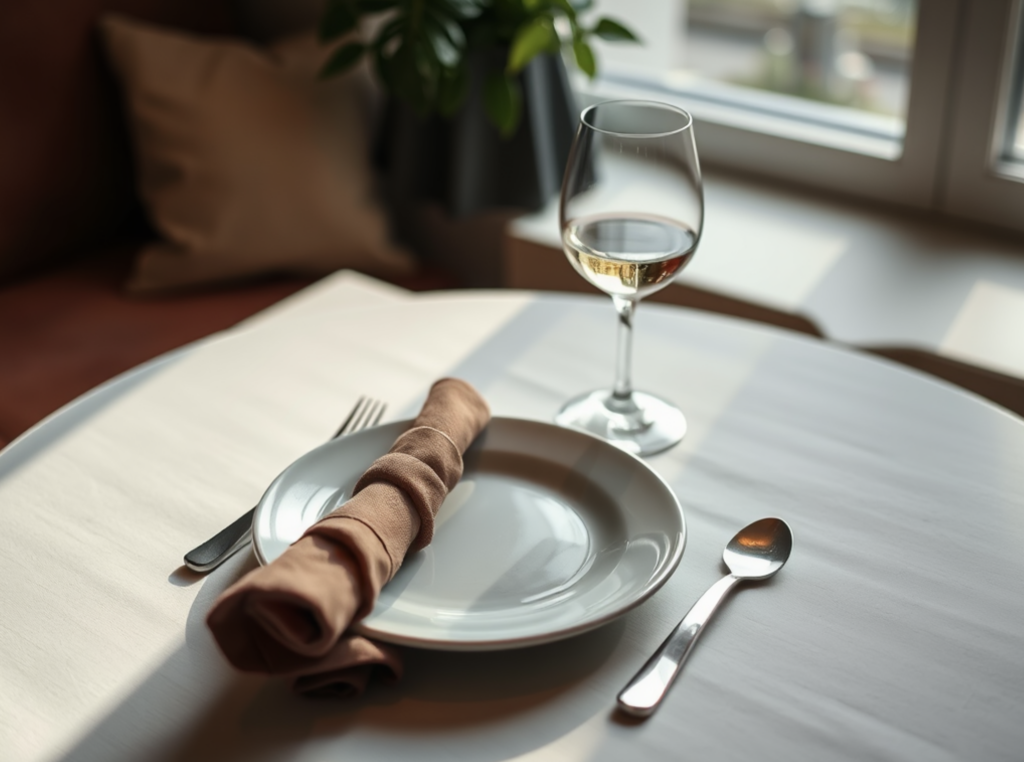
There’s a saying I heard not too long ago that hit me like a lightning bolt: “The hardest table to book isn’t at a fancy restaurant, it’s the table for one you finally have the courage to sit at by yourself.” It struck a chord that echoed somewhere deep inside me, because I remember those early days after my divorce when the thought of being alone was terrifying. For over 30 years, my life revolved around others—mainly my nine children. My days were full of noise, chaos, and the busy rhythm of raising a family. In truth, that noise became my comfort zone. It shielded me from having to sit with my own thoughts and feelings. As someone who essentially began life on my own at 16 when I got married, I became accustomed to always being surrounded by people to avoid feeling alone. But after my divorce, everything changed. Suddenly, I was splitting custody of my children and facing a quiet house 50% of the time. For the first time in decades, I was completely alone within four walls, and the silence that had once been just a fleeting visitor now felt like a heavy, unwelcome resident. The transition from “we” to “me” wasn’t just uncomfortable—it was excruciating. The Deafening Silence of Life Post-Divorce If you’ve ever found yourself in a situation where life as you knew it shifts dramatically—whether it’s a divorce, a career change, the kids leaving for college, or some other major transition—you know how unsettling it can be. For me, the silence was the hardest thing to adjust to. Without the constant buzz of my children around me or the sound of family conversations filling the rooms, the quiet was deafening. It felt like space itself had grown larger, like the walls were impossibly far apart, leaving room for thoughts I hadn’t been ready to confront. At first, I tried to drown out the silence. I’d play music—loud. Not the kind you put on to relax, but the kind you use to make everything else disappear. Music was my armor against the thoughts swirling in my head—the fears, the anxieties, the questions of who I was now when so much of my identity had been tied up in my roles as a wife and mother. But as the days turned into weeks and months, I noticed that I wasn’t reaching for the music as often. When I did press play, it wasn’t because I needed to drown out the silence, but because I genuinely wanted to enjoy it. Something subtle was shifting inside me—I was beginning to make peace with my own company. Facing the Challenge of Dining Alone One of the biggest hurdles that came with this newfound alone time was eating out by myself. Let me tell you, this was not something I embraced naturally. Dining out had always been a communal activity—it symbolized connection, laughter, and shared stories. The thought of sitting at a restaurant table alone, surrounded by couples and families, seemed foreign and intimidating. I avoided it for a long time. When the idea crossed my mind, my inner critic chimed in loudly: “People will stare. They’ll think you’re sad or lonely. What if it feels awful?” I’d distract myself and put it off, convinced that it was something I didn’t need to do. But I had a dear friend who refused to let me stay stuck in that narrative. She gently, yet persistently, encouraged me to take the leap and go eat out on my own. I remember the day I finally did it. I walked into the restaurant feeling a mix of nerves and determination. I chose a small corner table, keeping my head down to avoid what I assumed were the stares of strangers. I put my phone on the table, ready to use it as a crutch if things got uncomfortable. But as I sat there and let myself settle into the moment, something unexpected happened—I didn’t feel as awkward as I thought I would. In fact, I felt a small spark of pride. By the time my meal arrived, I actually found myself enjoying the experience. When the moment felt right, I even took a Snapchat photo and sent it to my friend with the caption: “I did it!” That small victory marked a turning point for me. The more I went out alone, the less intimidating it became. I stopped bringing headphones. I stopped using distractions. And eventually, I discovered the joy of being fully present in my own space. Being Alone Doesn’t Mean You’re Lonely What I learned through this journey was something powerful: Being alone doesn’t have to mean being lonely. In fact, spending time with yourself can be one of the most beautiful and healing gifts you’ll ever give yourself. When life transitions—like divorce, moving, or a career shift—force you into new spaces where you’re left with “just you,” it can feel overwhelming. But these moments are actually invitations to reconnect with the person you are at your core. For me, it was an opportunity to rediscover what brought me joy. I realized that my value didn’t come solely from what I did for others. I could take up space just because I existed—and that was enough. Life transitions often feel like being thrown into the deep end of unfamiliar waters. But the good news is, you can learn how to swim. At first, you might panic, flounder, and grasp for anything to help you float. But with time and practice, you develop the confidence to glide through those waters and find peace in the process. Why Learning to Be Alone Is a Superpower Learning to embrace solitude isn’t just a skill—it’s a superpower. Here’s why: It Strengthens Your Sense of Identity: Spending time alone allows you to get reacquainted with yourself. You start to separate who you are from the roles and labels you’ve carried. Who am I, really? becomes less of a scary question and more of an exciting journey. It Builds Resilience: When you can