The Kintsugi Method of Healing After Divorce
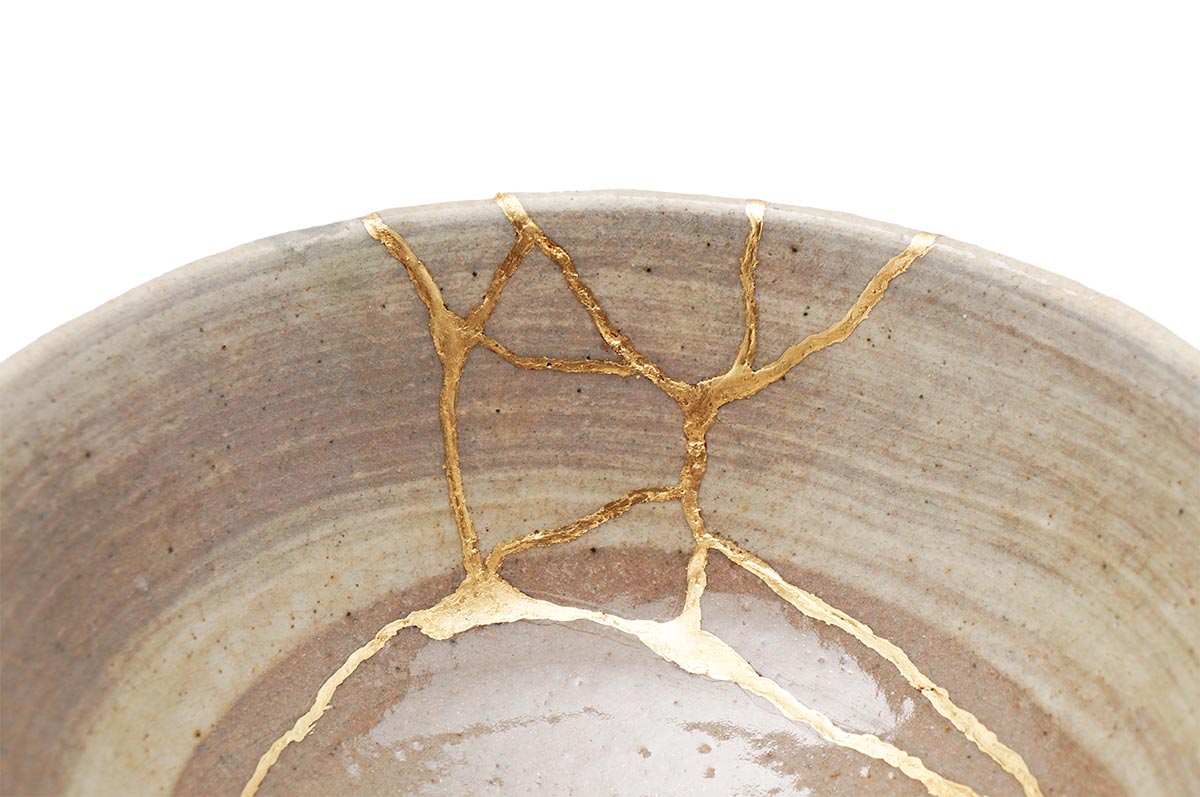
Kintsugi (金継ぎ, “golden joinery”) teaches us that our breaks can become our most beautiful features. Like precious gold filling the cracks of broken pottery, our emotional wounds—when properly healed—can transform us into something more valuable than before. This ancient Japanese art form doesn’t just repair what’s broken; it celebrates the history of the object, treating damage not as something to disguise but as an essential part of the item’s journey.
My journey with love has followed a similar path—a process of breaking, mending, and ultimately emerging stronger through the golden veins of hard-won wisdom.
The Foundation of Fractured Love
fter three decades of marriage beginning at age 19, I discovered that leaving wasn’t simply walking away—it was carrying boxes of emotional baggage that required careful unpacking. Two and a half years post-divorce, I’m still discovering layers of clarity about how I was treated and who I became in response. Some realizations arrive like gentle whispers, others like thunderbolts that shake my understanding of those three decades.
Growing up in a broken home without healthy relationship models, I approached marriage with logic rather than heart. I prioritized stability and the promise of family over compatibility and emotional connection. At 19, what did I truly know about love? Very little, it turns out. I knew only that I craved something steady to counter the chaos of my childhood—something that looked like the families I had envied from afar.
Without realizing it, I had chosen a partner reminiscent of my father—someone who couldn’t love me in the ways I needed most. The signs were there during our early dating years: communication difficulties, emotional unavailability, and a tendency to prioritize his needs over mine. But I mistook these red flags for challenges I could overcome with enough patience and love. I believed I could unlock his heart over time, never questioning whether I was locking away parts of my own in the process.
The Quiet Erosion
What’s most insidious about unhealthy relationships isn’t always the dramatic conflicts—those at least announce themselves clearly. Instead, it’s the subtle forms of mistreatment that we gradually normalize, the small sacrifices of self that accumulate over years until we barely recognize the person in the mirror.
When he proposed in Newfoundland, surrounded by icebergs and whales—a moment that should have been purely magical—part of me already knew we spoke different emotional languages. Yet I said yes, convinced that shared values around family would be enough. Nine months after our wedding came our first child, followed eventually by eight more. I had created the large family I’d always dreamed of, surrounded by people 24/7, never physically alone—and yet emotionally isolated in fundamental ways.
The irony wasn’t lost on me: I had successfully avoided my childhood loneliness while recreating its emotional architecture. As children, we often gravitate toward the familiar, even when the familiar hurts. Without conscious intervention, we find ourselves rebuilding the very structures we sought to escape.
The Awakening of Self-Worth
It wasn’t until a simple question—”What compatibilities did you share with your husband?”—that the full realization hit me. I had never chosen based on compatibility. I had selected for stability, financial security, good genetics, and the promise of family. Love languages, emotional intimacy, shared joy—these were afterthoughts at best, luxuries I convinced myself I could live without.
This is where generational patterns reveal their power. We inherit not just physical traits but relationship templates. My mother’s choices echoed in mine; my grandmother’s concessions lived on in my compromises. Breaking this inheritance required first seeing it clearly—recognizing that what I had accepted as “good enough” was actually starving my spirit.
The awakening wasn’t sudden but cumulative. Small moments of disrespect became harder to dismiss. The contrast between how others were treated and how I was treated grew sharper. Eventually, the gap between the life I was living and the life I deserved became too wide to ignore.
Breaking the Cycle: The Courage to Choose Differently
The real transformation began when I finally broke this dysfunctional pattern. Meeting a man who genuinely cherishes me has illuminated an unexpected challenge: learning to accept authentic love feels foreign and sometimes frightening. This new relationship serves as both mirror and catalyst, reflecting back to me all the ways I had adapted to emotional scarcity.
My neural pathways, conditioned to emotional neglect, resist this unfamiliar abundance. There are moments when I instinctively retreat toward familiar coldness rather than lean into the warmth being offered. Like a Pavlovian response, my mind questions what is good and true when faced with genuine affection.
“Is this real?” I wonder. “What does he want in return?” These questions arise unbidden, products of decades spent in transactional affection rather than unconditional love.
The most profound revelation has been discovering that receiving love requires as much courage as giving it—perhaps more. To be truly seen, valued, and cherished demands a vulnerability I had carefully armored against. Each gesture of authentic care requires me to dismantle another brick in the wall I built to survive.
The Neurological Rewiring
What makes this journey so challenging is that we’re not just changing behaviors—we’re literally rewiring neural pathways. Our brains, efficiency machines that they are, establish well-worn routes for processing emotions and interactions. When someone treats us with unexpected kindness after years of indifference, our brains sound alarm bells rather than celebration.
This neurological resistance manifests in surprising ways: sudden irritation at thoughtful gestures, inexplicable distance after intimate moments, or the persistent feeling that something must be wrong when everything is finally right. Psychologists call this “resistance to positive change,” and it’s a common experience for those transitioning from dysfunctional to healthy relationships.
Understanding this biological reality has been crucial to my healing. The discomfort I feel isn’t evidence that the new relationship is wrong—it’s evidence that my protective systems are working exactly as they were programmed to during years of emotional survival. Recognizing this allows me to observe these reactions with compassion rather than acting on them impulsively.
Strategic Steps for Embracing Love Again
Healing isn’t accidental—it requires intention and consistent practice. Here are the strategies that have proven most valuable in my journey toward accepting authentic love:
1. Recognize Resistance as Normal
When love feels uncomfortable, it might be challenging your old patterns, not warning you of danger. I’ve learned to pause when I feel the urge to create distance and ask myself: “Is this about now, or is this about then?” Often, the discomfort stems from old protective mechanisms that no longer serve me.
For example, when my partner surprised me with breakfast in bed, my initial reaction wasn’t gratitude but suspicion—what was he trying to compensate for? This response had nothing to do with his actions and everything to do with my past, where affection was often a prelude to disappointment.
2. Create New Response Pathways
Intentionally practice staying present when receiving affection rather than deflecting or diminishing it. This means accepting compliments with a simple “thank you” instead of contradicting them, allowing someone to do things for you without immediately feeling obligated to reciprocate, and sitting with positive attention without changing the subject.
I keep a journal where I document moments of receiving love and my responses to them. Over time, I can see my progress—from awkward deflection to genuine acceptance. This tangible record helps reinforce the new neural pathways I’m building.
3. Distinguish Between Then and Now
Develop awareness of when you’re responding to past hurts rather than present circumstances. This requires mindfulness—the ability to observe your thoughts and emotions without immediately identifying with them.
When my partner is quieter than usual, my past conditioning wants to interpret this as withdrawal or disapproval. I’ve learned to counter this with conscious reality-testing: “In my marriage, silence often meant disapproval. But this is a different relationship. He might just be tired or focused on something else.”
4. Communicate Your Process
Share your healing journey with your partner so they understand your reactions aren’t about them. This transparency creates space for grace and prevents misunderstandings that could otherwise damage the relationship.
I’ve found phrases like “I’m having a reaction that’s about my past, not about you” to be incredibly helpful. This acknowledges my feelings while preventing my partner from unnecessarily questioning himself or walking on eggshells.
5. Practice Self-Compassion
Healing isn’t linear—celebrate progress while giving yourself grace during setbacks. There will be days when old patterns reassert themselves, when fears feel overwhelming, or when vulnerability seems impossible. These aren’t failures but natural parts of the healing process.
I used to berate myself for “still not being over it” when old insecurities surfaced. Now I understand that integration happens gradually, and each trigger that arises is an opportunity to heal another layer. Self-compassion creates the emotional safety needed for genuine change.
6. Trust the Evidence
When doubt creeps in, focus on consistent actions that demonstrate care rather than familiar fears. Create a mental or physical inventory of ways your partner has shown up for you reliably. This concrete evidence helps counter the abstract anxieties that dysfunction conditioned you to expect.
I keep what I call a “truth collection”—notes, messages, and memories that demonstrate consistent care. When insecurity whispers that I’m unlovable or that this happiness can’t last, I return to this collection as a reality check against my fears.
7. Allow Vulnerability in Stages
Open yourself gradually, testing the waters of trust with increasing depth. There’s no need to force complete openness all at once. Think of vulnerability as a practice rather than a permanent state—something you can move into and out of as you build capacity.
I started with small disclosures: sharing minor disappointments or simple needs. As these were consistently met with respect and care, I gained confidence to share deeper aspects of myself. Each positive experience builds the foundation for the next level of trust.
The Dance of Growth Together
What’s beautiful about healing within a healthy relationship is that it creates space for mutual growth. As I learn to receive love, my partner learns to understand trauma responses without taking them personally. His patience with my process helps me extend the same grace to myself.
Our relationship isn’t perfect—no relationship is—but it’s intentional. We discuss attachment styles and triggers. We check in about comfort levels and boundaries. We celebrate progress and navigate setbacks together. This conscious approach contrasts sharply with my marriage, where emotional patterns operated largely on autopilot, unexamined and unchanged for decades.
The Ripple Effect
The benefits of this healing extend far beyond our relationship. As I learn to recognize and value authentic love, I become a better model for my children. Breaking generational patterns doesn’t just change my life—it alters the inheritance I pass down. My adult children now witness a mother who expects respect, communicates needs, and receives love with increasing grace. This may be the most meaningful aspect of my journey.
Additionally, friends often comment on changes they observe: increased confidence, clearer boundaries, and a willingness to speak my truth where I once would have remained silent to keep peace. The work done in intimate relationship radiates outward, transforming all connections.
The Takeaway: Your Breaks Become Your Brilliance
The most profound relationships often come after significant heartbreak—not despite our breaks but because of how we’ve learned to heal them. By consciously rewiring our responses to love, we develop a capacity for deeper connection than ever before.
Like Kintsugi pottery, we don’t hide our golden scars. We display them proudly as evidence of our journey and the strength required to become whole again—more beautiful and valuable for having been broken.
The cracks in our hearts, filled with the gold of wisdom, compassion, and conscious choice, create something far more precious than an unblemished but limited capacity for love. Through our healing, we develop emotional depth and authenticity impossible without the contrast of past pain.
My journey continues. Some days the gold shines brightly; other days I need to polish away the tarnish of old habits. But I no longer mistake the broken places for weakness—they are precisely where my greatest strength and beauty now reside.
And in this truth lies the ultimate promise of Kintsugi hearts: we are not diminished by our breaks but made more unique, more resilient, and more capable of reflecting light in all its complex, golden brilliance.